
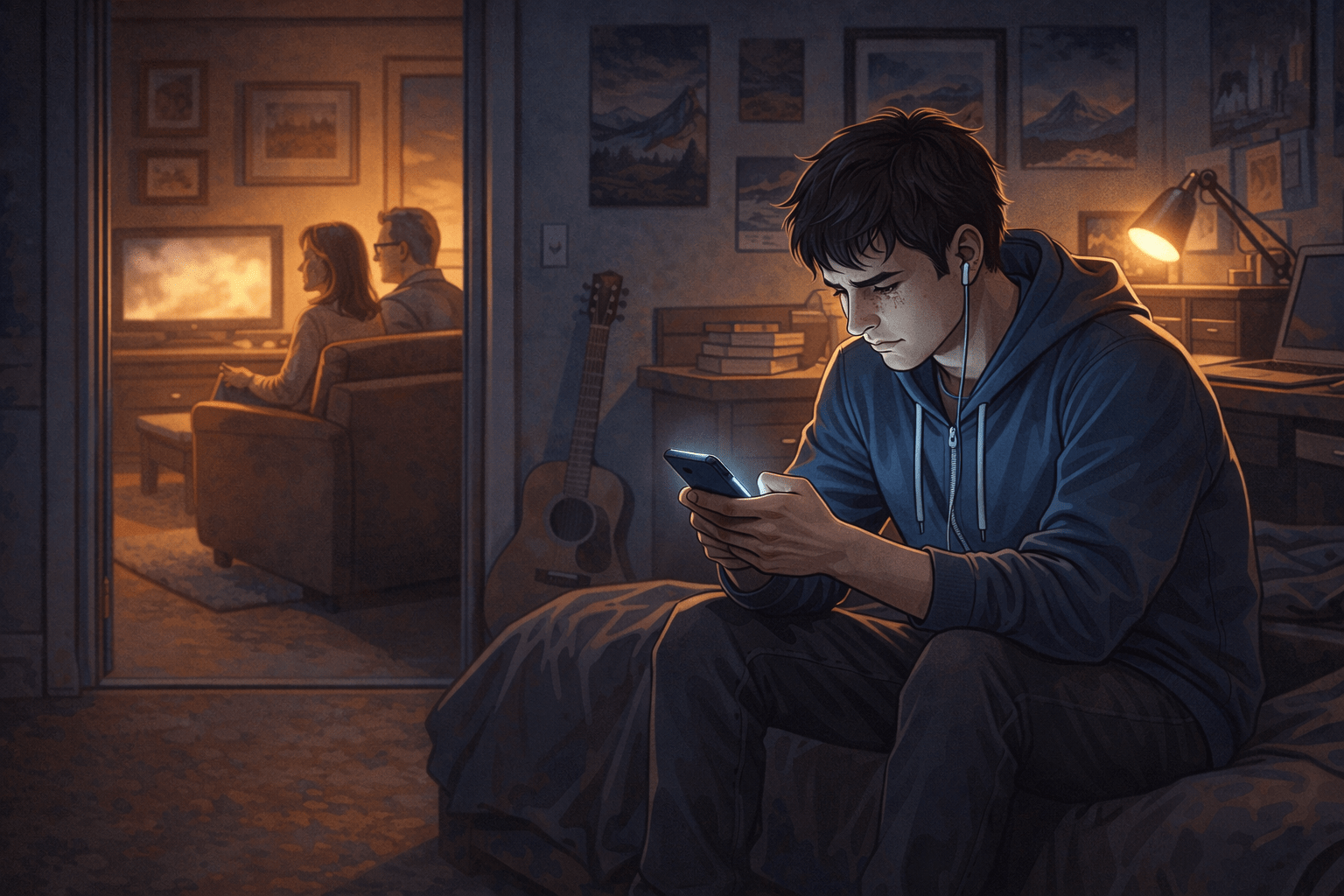
The change isn’t just financial
Living at home longer is often discussed as an economic reality.
High housing costs.
Student debt.
Delayed milestones.
Those factors matter. But they don’t fully explain why this arrangement feels heavier than it used to — or why it subtly reshapes how people relate to others.
The real impact isn’t just financial.
It’s social.
The common explanation focuses on maturity
Extended time at home is often framed as a developmental issue.
People are growing up later.
They’re avoiding responsibility.
They’re less independent than previous generations.
That framing misses something important.
Many people living at home are working, disciplined, and contributing. The issue isn’t lack of adulthood.
It’s lack of separation.
Independence used to be enforced by distance
For much of the past century, adulthood was marked by physical departure.
Leaving home created:
-
clear boundaries
-
autonomous routines
-
social recalibration
Distance forced people to renegotiate identity — not just with parents, but with peers, partners, and themselves.
Living at home delays that renegotiation.
Not because people refuse it — but because the system no longer makes it accessible.
Why proximity changes perception
Social dynamics respond to context more than intention.
Living at home subtly signals:
-
reduced autonomy
-
limited flexibility
-
delayed optionality
These signals aren’t moral judgments. They’re shorthand — especially in environments where independence is associated with reliability and readiness.
Even when unfair, perception shapes interaction.
The effect on romantic and peer relationships
Romantic relationships are especially sensitive to this dynamic.
Privacy is constrained.
Spontaneity is reduced.
Future planning feels abstract.
Peers respond similarly.
Social invitations narrow.
Schedules feel harder to align.
Life stages drift out of sync.
Over time, people don’t pull away consciously.
They recalibrate unconsciously.
Why this creates quiet isolation
Extended time at home often produces a paradox.
People are rarely alone — yet increasingly isolated.
They interact daily.
They feel supported.
But they struggle to build momentum outside the household.
The home becomes stabilizing — and limiting at the same time.
That tension is difficult to articulate, which is why it often goes unaddressed.
What capable people tend to notice earlier
People who navigate this period well separate dependency from proximity.
They establish:
-
independent routines
-
external commitments
-
clear social anchors outside the home
They create psychological distance even when physical distance isn’t possible.
They don’t wait for conditions to change.
They redefine boundaries within them.
Why this connects to broader social shifts
This isn’t an isolated phenomenon.
Delayed independence reshapes:
-
friendship patterns
-
romantic timelines
-
professional perception
As more people remain at home longer, social coordination becomes harder. Life paths desynchronize.
Connection requires shared rhythm.
When rhythms diverge, relationships strain quietly.
A clearer way to see living at home longer
Living at home isn’t failure.
But it isn’t neutral either.
It changes how others experience your availability, autonomy, and trajectory — regardless of effort or intent.
The real question isn’t “Is this good or bad?”
It’s:
“What signals does my environment send before I speak?”
Seeing those signals clearly allows people to counterbalance them — deliberately, not defensively.
And that awareness restores influence where silence quietly erodes it.





0 Comments