
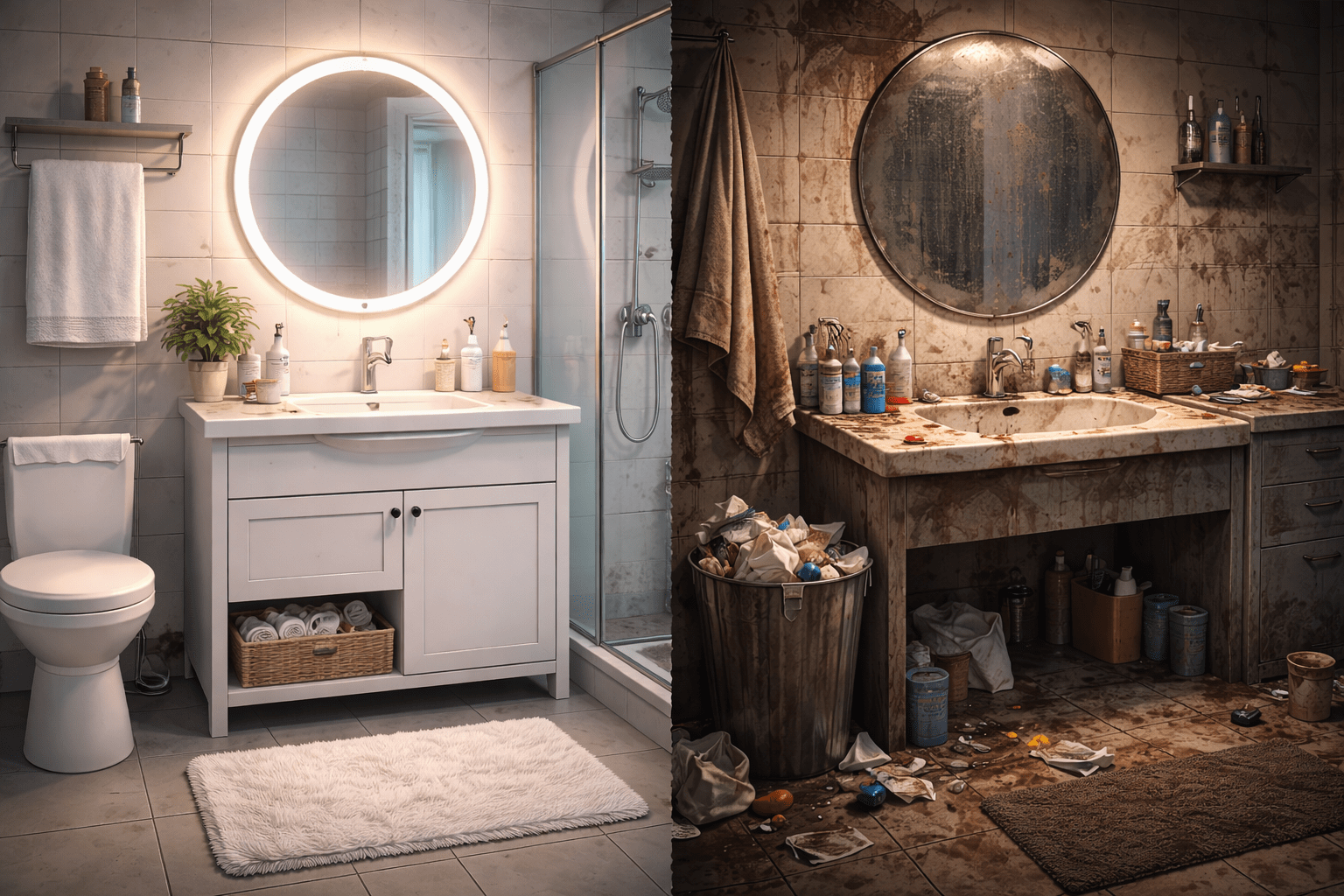
The difference is subtle, but everyone notices it
Most people don’t think of hygiene as a health topic.
It feels basic.
Private.
Almost too obvious to matter.
And yet, it’s one of the first things people register — often without realizing it.
Energy shows up in posture.
Care shows up in grooming.
Order shows up in details.
Nothing dramatic. Just small signals that quietly accumulate into an impression.
The common explanation frames hygiene as vanity
Hygiene is often dismissed as superficial.
Cosmetic.
Image-focused.
Concerned with appearances instead of substance.
That framing misses what’s actually happening.
Most hygiene habits aren’t about looking impressive. They’re about maintaining baseline order — physical, mental, and social.
And when that baseline slips, it rarely slips in isolation.
Hygiene is a maintenance system, not a statement
Showering regularly.
Taking care of teeth.
Keeping skin healthy.
Wearing clean, well-kept clothes.
These behaviors don’t signal excess. They signal control.
They suggest:
-
predictability
-
self-regulation
-
awareness of environment
None of this requires obsession or luxury. It requires consistency.
And consistency is what most systems quietly respond to.
Why neglect compounds faster than people expect
Hygiene doesn’t collapse overnight.
It erodes.
A missed routine here.
Deferred care there.
Small neglects that feel inconsequential.
But neglect compounds socially and physiologically. Poor oral health affects systemic health. Skin issues reflect inflammation and stress. Grooming lapses often correlate with fatigue or low mood.
The body and mind don’t separate these signals.
They reinforce them.
The hidden social cost
People rarely articulate this, but they respond to it.
Cleanliness affects:
-
perceived competence
-
trustworthiness
-
confidence attribution
Not because people are judgmental — but because humans use proxies.
Hygiene becomes shorthand for self-management.
When those signals are strong, interactions feel easier. When they’re weak, friction increases — often without explanation.
Why this matters more now than before
In earlier eras, hygiene standards were simpler.
Today, environments are harsher:
-
polluted air
-
processed food
-
chronic stress
-
artificial light
Maintenance matters more because degradation happens faster.
Ignoring hygiene isn’t neutrality anymore.
It’s drift.
What capable people tend to notice earlier
People who maintain presence and credibility over time don’t chase grooming trends.
They standardize care.
They build routines that:
-
require little thought
-
survive busy schedules
-
reset daily without effort
Hygiene becomes infrastructure — not performance.
Like sleep or nutrition, it’s managed quietly so attention can go elsewhere.
Why this mirrors other vitality patterns
The same principle appears everywhere.
Energy declines when maintenance is irregular.
Health degrades when small inputs are ignored.
Confidence erodes when self-care becomes reactive.
Hygiene isn’t separate from vitality.
It’s one of its clearest expressions.
A clearer way to see hygiene
Hygiene isn’t about impressing anyone.
It’s about preventing unnecessary friction — internally and externally.
The real question isn’t “Do I look good?”
It’s:
“What level of order do I maintain without thinking?”
That answer predicts far more than people realize.






0 Comments